
Stylised, but Not Sovereign: The MERCATO Decisions and the Protection of Foreign & Composite Trade Marks in Australia

Two recent Australian decisions involving the trade marks “MERCATO” and “MERCATOCENTRALE have offered valuable guidance on a long-standing question in trade mark law: how much protection does a stylised word mark really offer? These cases have clarified that registering a stylised version of a word does not give the owner a monopoly over the plain word itself, especially if that word is descriptive or foreign but commonly understood by Australians.
For brand owners, IP professionals, and businesses looking to enter or expand within the Australian market, the decisions highlight the limits of stylisation and the risks of relying on foreign-language terms that lack inherent distinctiveness. This article unpacks the legal reasoning behind the decisions and offers practical guidance for clients seeking effective, enforceable, and safe strategies.
Case Overview
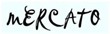
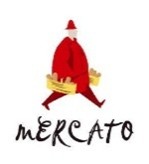
The dispute began when Caporaso Pty Ltd (Caporaso), a South Australian business operating a European-style food market called MERCATO, opposed an application by Mercato Centrale Australia Pty Ltd (Mercato Centrale), an Italian food hall brand, to register a composite trade mark featuring MERCATO CENTRALE in stylised font.
The dispute that followed involved the following trade marks relied upon by the parties:
| Caporaso’s trade marks | Mercato Centrale’s trade marks |
| MERCATO | Mercato Centrale |
 |
Il Mercato Centrale |
 |
 |
Caporaso argued that the trade marks were deceptively similar, and that consumers could be likely to confuse all of Mercato Centrale’s marks with all of Caporaso’s marks. However, the Federal Court found otherwise. It held that, although the marks all contain the shared element “MERCATO”, none of the stylised versions of the marks were deceptively similar when considered as a whole.
The Federal Court emphasised that:
- The term “mercato” simply means “market” in Italian.
- Australian consumers familiar with food and hospitality would likely understand this translation.
- The visual presentation and additional word “CENTRALE” in Mercato Centrale’s trade marks contributed to a sufficiently different overall impression.
In appeal, the Full Court methodically compared each of the marks again. Below is a table summarising the Full Court’s assessment of deceptive similarity of each of the marks:
| The parties’ relevant trade marks | MERCATO | |
|
| Mercato Centrale | Deceptively similar | Sufficiently different | Sufficiently different |
| Il Mercato Centrale | Deceptively similar | Sufficiently different | Sufficiently different |
|
Sufficiently different | Sufficiently different | Sufficiently different |
In relation to the plain word marks, the Full Court found that the words MERCATO CENTRALE and IL MERCATO CENTRALE were deceptively similar to MERCATO, and took into account that “it is common knowledge that descriptive adjectives may follow nouns in the particular context of sub-brands, often to indicate a variant of some description”.
However, the Full Court found that the plain words MERCATO CENTRALE and IL MERCATO CENTRALE were not deceptively similar to the stylised marks, including the stylised word “MERCATO” because an essential feature of that registration is that “it is in a fancy script. The monopoly it secures is not a monopoly over the plain word mercato. Rather, it secures a monopoly over that word as rendered in the fancy script depicted on the Register” and “the notional consumer’s imperfect recollection […] would, as part of that imperfect recollection, include that the word is rendered in a curly typeface.”
As a result, the Federal Court’s ruling was upheld on appeal, which solidified several key principles regarding descriptive foreign terms, stylised marks, and how composite marks are assessed under Australian law.
Key Takeaways for IP Professionals
Stylisation ≠ Monopolisation
The above decisions confirm that registering a stylised mark does not confer ownership of the plain word in isolation. The courts reinforced the principle that trade mark rights stem from the distinctive combination of elements, not just a stylised rendering of a common word.
If a registered mark is stylised but the underlying word is descriptive or weak, its ability to block similar words – even in dissimilar styles – may be limited.
Foreign Words Can Be Descriptive
Words in a foreign language may still be considered descriptive in Australia if they are reasonably understood by the average target consumer. In industries where certain foreign terms are commonly used – such as “MERCATO” in food and beverage – the courts are more likely to treat these terms as generic, thus less distinctive.
The more descriptive a word is, the harder it becomes to protect – before applying to register a foreign word, check whether it is commonly understood in Australia.
Composite Trade Marks Must Be Viewed as a Whole
The courts reiterated that trade mark similarity must be assessed as a whole, including its common and non-distinctive elements. Differences in font, style, concept, and the presence of additional elements (e.g. “CENTRALE”) may be sufficient to avoid confusion – even if two marks share a word as their dominant feature.
Whether consumers are likely to perceive common and non-distinctive elements of a trade mark as descriptive additions will depend on the placement, within the trade mark, of these elements, including size of text and any other elements may provide a different context and consequently alter the overall impression of the trade mark.
Practical Implications for Brand Owners
For Startups & SMEs
Many startups rely on stylised word marks, especially for branding in crowded markets. The MERCATO decisions serve as a reminder: stylisation is not a shortcut to strong protection. If your core brand name is a descriptive or foreign term, stylisation alone won’t provide robust rights.
Practical tip: Register both the word mark and the logo where possible. The word mark provides broader protection, while the stylised logo captures brand identity. Budget constraints are common, but early investment in the right filings can prevent expensive disputes down the track.
For Global Companies
If you’re expanding into Australia with a foreign-language brand, take care to assess how that brand name will be perceived locally. A term that’s distinctive overseas may be understood as descriptive in the Australian context — weakening both registrability and enforcement options.
Example: Names like “Panificio”, “Trattoria”, or “Mercato” may all face hurdles if used in relation to food services in Australia.
Tip: Work with local counsel to assess whether your foreign-language mark is distinctive in the eyes of the Australian consumer. Where necessary, include more distinctive elements to strengthen your mark.
Cost-Efficient Strategies
Enforcement becomes costly when your rights are weak or unclear. Proactively registering strong, distinctive marks — including both stylised and plain word versions — can save significant legal costs later.
Additional suggestions:
- Avoid over-reliance on generic foreign terms.
- Where budgets are tight, prioritise word marks with strong inherent distinctiveness.
- Consider localising your brand name where feasible to increase protectability.
Looking Ahead: Brand Protection in a Globalised, Multilingual Market
As Australian consumers become increasingly exposed to global brands, courts and IP Australia are more likely to treat commonly used foreign terms as descriptive. This makes it even more important for businesses – regardless of size – to invest in distinctive branding.
Expect continued scrutiny of marks that rely heavily on generic foreign words, particularly in industries where international terminology is common.
Conclusion
The MERCATO v MERCATO CENTRALE decisions deliver a timely and practical lesson: a stylised word mark is not a shield for weak or descriptive branding. Whether you’re a startup or a multinational entering the Australian market, distinctiveness – in any language – is key to strong, enforceable trade mark rights.
Early investment in clear, strategic trade mark protection not only supports brand safety but can help avoid costly disputes in the future.
Call to Action: Checklist for Clients
- Register both stylised and plain word marks
- Clear marks in each key market
- Watch for similar composite marks
- Use distinctive, non-generic branding elements
- Try to avoid using (foreign) descriptive terms
If you would like to discuss trade mark protection options in Australia, or have questions about the above, please feel free to contact the Trade Marks team at MBIP.