
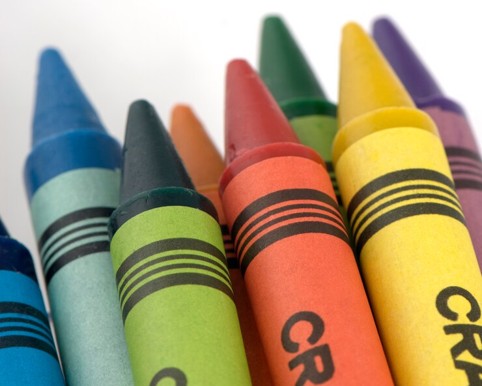
Crayola’s US Scent Trade Mark Battle
Crayola won a major trade mark victory in 2024: the registration of their “crayon scent” as a scent trade mark in the United States.
It was a hard-fought battle, with the USPTO refusing the application 4 times, on the basis that the scent was merely a result of the ingredients used to produce the crayons and any other crayon for that matter. Therefore, the scent was functional rather than an identifying feature of the product.
In the end, Crayola successfully argued that the scent is specific to Crayola crayons and resulted from a “special step” in the manufacturing process that is not standard for crayon production, making it unique and registrable as a trade mark.
This case took place in the US, but scent marks are also available to be registered in different jurisdictions, including Australia.
Scent Trade Marks in Australia
In Australia, there are a large variety of “kinds” of trade marks: words, phrases, logos, series trade marks, colours, shapes, sounds, scents, movement, hologram, taste, feel, position and tracer marks (coloured lines or threads applied to products such as textiles or even garden hoses). IP Australia explains and lists examples of several of these kinds of marks on their website.
Scent trade marks are a rare breed of trade mark.
Out of the almost 900,000 registered trade marks currently live in Australia, only two are scent marks. Whilst there have been 17 applications filed for a scent trade marks, the two which managed to proceed to registration were: trade mark numbers 1241420 (for “a Eucalyptus Radiata scent” applied to golf tees) and 1858042 (“the smell of cinnamon (being principally Cinnamaldehyde) applied to non-wood based furniture”).
One other mark was accepted but lapsed due to nonpayment of the registration fee: “the strong smell of bitter beer” for darts, although the same mark was successfully registered in the UK in 1994 (see UK00002000234) and remains in force in that jurisdiction.
Scent Trade Mark Requirements
Not just any scent used for any good or service can be registered as a trade mark. IP Australia imposes some requirements for what can be registered, which are explored below.
Firstly, the scent must be able to be represented graphically via a precise and accurate written description included with the application. Smells that are familiar to a consumer and which are able to be described unambiguously are the best candidates for this kind of protection.
Secondly, the scent must actually function as a trade mark; it must be capable of distinguishing your goods or services from others in the market, making it easy for consumers to identify the source. Therefore, to satisfy these criteria, the scent should not be the natural scent of the goods or services themselves such as the scent of perfume for perfume goods, not be a masking scent as this has a functional purpose of covering up a bad smell, or be something others commonly use in connection with similar goods/services such as lemon scent in soap. In short, to be considered for trade mark protection the scent must be unique and distinctive rather than a natural or expected aspect of the product; the scent needs to be apart from the goods themselves and specifically for the purpose of making your goods identifiable via smell.
Difficulties with Registration
This kind of mark is uncommon due to difficulties in unambiguously describing the mark in a manner which an ordinary person can understand and difficulties in meeting the required distinctiveness threshold.
In fact, as a result of these difficulties it is not currently possible to register a scent trade mark in the European Union. The European Union has determined that technology is not currently available to ensure that the representation of the scent trade mark is clear, precise, self-contained, easily accessible, intelligible, durable and objective. Their concerns are based on the fundamental fact that scents are a sensory experience and are interpreted by every individual in a different manner. Therefore, representing a scent in words is not sufficiently precise to determine exactly what the trade mark is.
If the mark was for “the scent of cut grass” everyone would likely generally know what scent is being intended. However, the scent would be different between species of grass, dependent upon how much it has been watered, the season and the time of day when it is cut, etc. It is not possible for the written description to be objective and identify exactly the same trade mark to everyone.
Whilst Australia has not been as extreme as the European Union in its requirements regarding the description of the trade mark, they do still require the description to be unambiguous. Applications containing descriptions that do not succinctly and accurately describe the relevant smell in a way discernible to the ordinary person will face difficulties in registration. For example, “a fresh scent reminiscent of the beach” is too vague, but “the smell of vanilla” is less ambiguous. Results of technical scent analysis, like electronic nose analysis, are not able to be used to describe the trade mark as they do not communicate the trade mark to the ordinary person and therefore are not acceptable representations of a smell
With respect to the distinctiveness threshold, marks in Australia which have failed to meet the requirements include the scent of eucalyptus for laundry powders, the scent of coffee for tanning lotions and hair shampoo, the scent of lemon for tobacco and the scent of peppermint for medicines. Marks which have succeeded overseas such as in the United States include the scent of bubble gum for shoes (no particular flavour specified), the scent of fresh, sweet oranges for shoe polish or more surprisingly, a scent of banana and evergreen, with a hint of ammonium and kerosene but excluding the scent of ammonium and kerosene for preparations for cleaning guns.
Take Aways
All trade mark types may face their own unique difficulties during the registration process. When you’re applying for a trade mark, we recommend getting in contact with an attorney to guide you through the challenges you may face.
The team at MBIP is experienced in a range of matters relating to the filing and prosecution of these IP rights, whether they be formalities issues with your applications, adverse examination reports from the trade marks office, or oppositions by other traders.