
Shifting Scientific Silos: The Rise of Interdisciplinary Technology Spaces
Published 22 August 2025
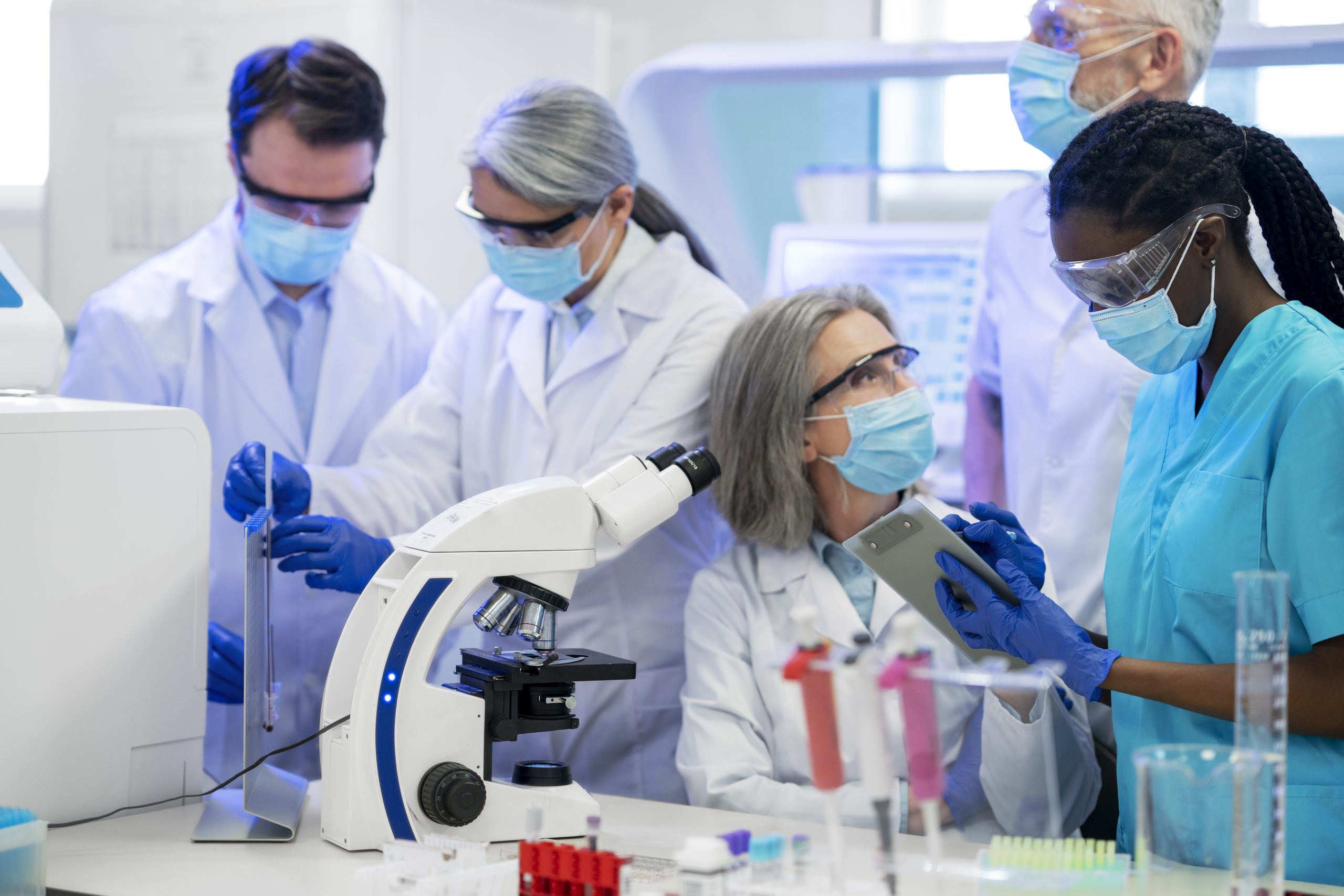
The culture of scientific research is changing. Scientists are no longer tied to the bench or limited by traditional disciplinary boundaries. This shift in culture can be seen in the emergence of interdisciplinary technology spaces, such as the integration of pharmaceuticals with digital healthcare or the use of artificial intelligence (AI) in biomedicine. As we move towards the next frontier of innovation, it is imperative to identify, protect and leverage intellectual property assets early and effectively. This is particularly important where the technology spans disciplines, institutions and countries.
The Changing Face of Science
Scientific research has long been defined by disciplinary boundaries. The siloed approach to knowledge originates in academia where students, and PhD candidates in particular, are taught to hone their knowledge and skills in a particular subject area attached to a particular discipline. They are encouraged to collaborate with other scientists of similar views, in similar research spaces, in the hope of one day being a bona fide scientist themselves – within that same discipline.
In a rapidly evolving scientific landscape, this traditional siloed approach results in a fragmented knowledge base and limits the ability to achieve commercially applicable objectives. In order to tackle the big issues facing our society today, science is starting to move beyond compartmentalised knowledge and into the realm of cross-disciplinary collaboration.
Scientific Collaboration in the Age of COVID-19
Whilst the development of the COVID-19 vaccines capitalised on decades of research and development in the fields of viral immunology, computations biology, protein engineering and gene synthesis, it remains an unprecedented display of international collaboration between government bodies, research institutions, private corporations and the pharmaceutical industry. By April 2020, less than six months after the first reported case of COVID-19, almost 80 companies and institutions across 19 countries were working on vaccines.
In addition to the bench science, the ability to fast track the global rollout of the vaccine was supported by expedited clinical trials, reduced regulations and billions of dollars in funding. Overall, it took under 12 months to develop and register multiple protective coronavirus vaccines internationally. In Australia, the first of these vaccinations were rolled out in February of 2021. This was the epitome of one of the most challenging logistical exercises in modern history, an exercise which was only possible through extensive and unparalleled cross-disciplinary collaboration. By stepping outside ‘how it’s always been done’, and simply focusing on how it can be done, science achieved what many thought would be impossible.
Post-COVID Interdisciplinary Collaborations
Following COVID, the attitude to scientific research changed and a new culture formed, one which opened up more opportunities for scientists from all disciplinary backgrounds to work together on common goals. This shift in culture can be seen in the emergence of interdisciplinary technology collaborations, such as the integration of pharmaceuticals with digital healthcare or the use of AI in the drug discovery process.
Kakao Healthcare, a South Korean company joined forces with multinational healthcare firm Novo Nordisk in 2023 to provide improved health care services for patients with diabetes. As part of that collaboration, Kakao’s digital blood glucose management service will be merged with Novo Nordisk’s Smart Sensor, a sensor able to be connected to conventional insulin pens to collect and log daily insulin data.
Atomwise, a ‘technology-enabled pharmaceutical company’ based in California, USA, is utilising AI to transform small molecule drug discovery. According to their website, Atomwise has collaborated with over 250 research institutes and universities across the globe and has generated numerous joint IP assets from the resulting small molecule compounds. Sanofi, recognising the potential for AI to transform the drug discovery process, signed a $1.2b research collaboration deal with Atomwise in August 2022.
Ketim Technologies, an Australian based biotech startup, is focusing on developing precision diagnostics for perinatal mental illness through advanced biomarker discovery and predictive analytics. Ketim’s technology utilises protein biomarkers in combination with AI to enable a personalised approach to the treatment of mental health disorders. In particular, Ketim is seeking to develop the first early predictive test for postpartum depression.
Key Take Aways
Science no longer sits in defined silos and neither should IP. Here at MBIP, we are experienced with identifying, protecting and leveraging IP assets across a wide range of scientific disciplines, including those within the interdisciplinary technology space.
If you are an innovative company working in an interdisciplinary technology space, it’s never too early to have your patent attorney involved. Take proactive steps today to maximise the value of your IP assets.
If you would like to discuss patent protection options in Australia, or have questions about the above, please feel free to contact the team at MBIP. Our experienced team of attorneys would be glad to assist.