

Following on from our recent discussions on design registration strategy and international portfolio management, I thought it would be beneficial to examine a recent Australian design decision that highlights just how critical evidentiary auditing and technological context can be during examination.
In UAB Orbio World 2026 ADO 5, the Delegate considered whether a registered design for a “Portable Wi-Fi Apparatus” was distinctive over the prior art base under Section 15(1) of the Designs Act 2003 (Cth). While design examination often comes down to side-by-side visual comparisons, this decision offers some fantastic insights into how digital archiving tools and shifting technology trends can make or break a case.
 |
 |
|
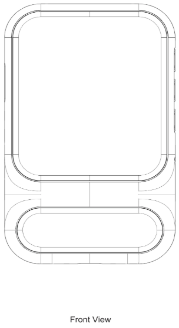
Representation – Front View |
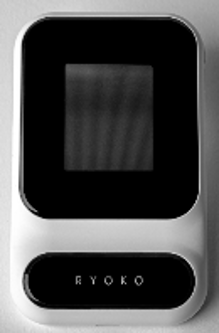
Citation – Front View |
Prior Art & Supplementary Evidence – What Are the Relevant Dates?
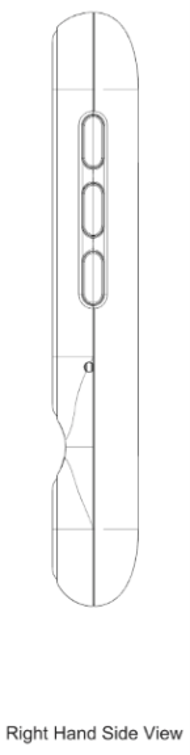
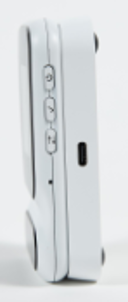
Looking first at the evidentiary arguments, a major point of contention was the noticeable difference in device thickness and bulk shown in the Right-Hand View of the registered Design compared to the prior art Citation.
 |
 |
|
Representation – Right View |
Citation – Right View |
The Examiner argued in the second examination report that the Citation’s depiction included a separate docking station. To support this claim, the Examiner included images of a custom charger/docking station. Unfortunately we don’t have access to those supplementary images of the custom charger/docking station.
However, the Owner conducted an Internet Archive (Wayback Machine) search which proved that the Examiner’s dock images were actually published after the Design’s priority date of 27 March 2025. Because material published after the priority date cannot form part of the prior art base, the Delegate held that these images could not be relied upon. This effectively knocked out the Examiner’s counter-argument, confirming that the difference in physical bulk was a genuine point of visual distinction.
What Does the Prior Art Actually Show?
A common hurdle in design law arises when a prior art citation fails to disclose every angle of a product, an issue referred to as “incomplete views” or the “quantum of disclosure”. Here, the Citation showed only three views, omitting both an Underside View and a Left-Hand Side View. In contrast, the registered Design detailed an underside electrical port and a left-hand access aperture.
The question was whether the familiar person would reasonably infer that these features existed on the hidden sides of the Citation:
- Left-Side Access Aperture – The Delegate refused to assume that the Citation’s left side mirrored its right side or contained a SIM card slot. Crucially, the Delegate observed that a familiar person would not necessarily expect an access aperture on a modern portable Wi-Fi unit, given that these devices increasingly rely on virtual SIM or eSIM technology. This illustrates how technological trends at the relevant priority date can impact the assessment of prior art.
- Underside Charging Port – While charging ports are common on mobile hardware, the Delegate noted that the exact shape of an underside port cannot simply be surmised where the aperture shape itself forms a visible design feature.
Development of the Prior Art Base & Freedom to Innovate
When assessing whether a design creates a substantially similar overall impression, Section 19(2)(a) requires the decision-maker to have regard to the state of development of the prior art base, alongside the creator’s freedom to innovate under Section 19(2)(d).
There is an interesting dynamic here in how the Examiner’s arguments ultimately played out.
In the second examination report, the Examiner pointed to the broad scope for innovation in shaping connectivity ports, buttons, and screens, attempting to frame these as minor variations within a designer’s discretion that did not prevent a finding of substantial similarity.
However, this approach seemingly backfired. To support the position, the examination search gathered an extensive array of prior art showing portable Wi-Fi devices, mobile routers, and wireless modems. Rather than de-emphasising the differences, this search established that the prior art base was heavily crowded at the priority date.
Under established principles, where a prior art field is mature and crowded, the notional “familiar person” under Section 19(4) becomes accustomed to seeing small design variations and naturally attributes greater significance to smaller visual differences.
Consequently, the evidence of a crowded field led the Delegate to conclude that the smaller physical differences in device bulk, side profile, and port placement had to be carefully weighted. When comparing the Design as a whole against the Citation, those physical distinctions were sufficient to give the Design a distinct overall impression.
Takeaways for Design Owners
This decision provides several valuable lessons for applicants and IP practitioners:
- It’s important to audit Examiner evidence rigorously. Never assume an examiner’s citation or supplementary evidence pre-dates your priority date. Using digital tools like the Wayback Machine to audit publication dates can dismantle an examiner’s objection.
- Frame arguments around industry trends and advances in technology. When dealing with incomplete prior art disclosures, consider how modern tech shifts (such as the move from physical SIM slots to eSIMs) influence what a “familiar person” would reasonably infer.
- There is a delicate balance between freedom to innovate and a crowded prior art base. If an examiner highlights widespread variation across a product class, you may be able to leverage that search evidence to demonstrate a crowded prior art base under s 19(2)(a), where small hardware differences carry elevated legal weight.
- Focus on hardware configuration over surface branding. The Delegate reaffirmed established precedent (Reckitt Benckiser) by rejecting arguments based on surface text (“RYOKO”) and minor internal screen borders. In crowded fields, key shape and configuration details, like ports, contours, and overall thickness, are what truly count.
If you are looking to protect your product designs or need guidance navigating design examination, reach out to the team at MBIP.
Related reading: Upcoming Changes to the Australian Designs Act