Patent Inventorship and Considerations for the Future
If you have been following our article series discussing patent ownership and entitlement, the present article shifts the focus from how patent ownership and entitlement issues can be navigated under the different provisions of the Patents Act (“the Act”), to some considerations that might be of interest when determining inventorship, particularly in light of technological advancements.
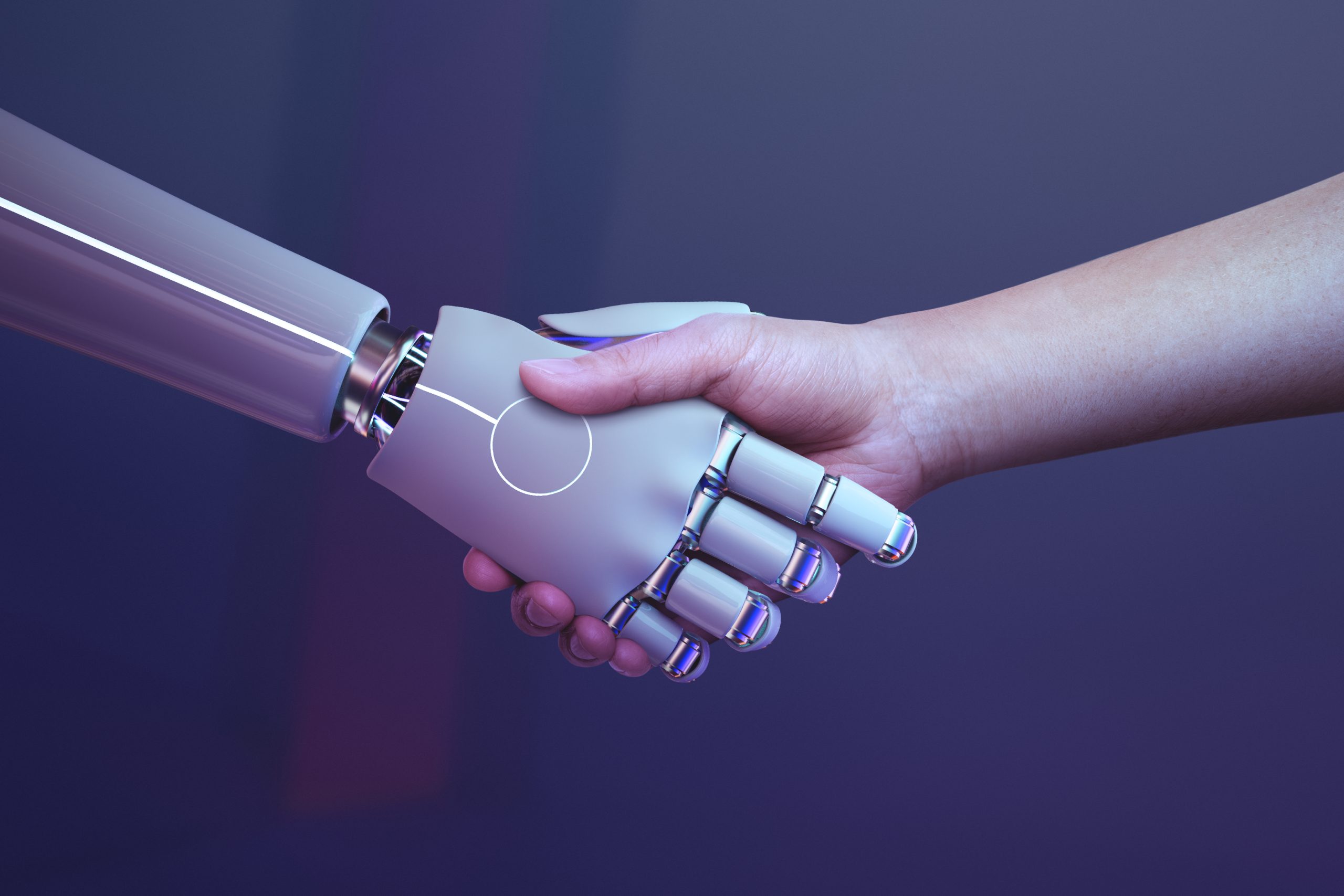
With the rising sophistication of artificial intelligence (AI) systems, it is fascinating to see that some inventions can be conceived through the use of computers. In a recent article published in Science Translational Medicine (Douville et al. Machine learning to detect the SINEs of cancer. Sci Transl. Med. (24 Jan 2024) Vol 16, No 731), researchers have developed a machine learning approach to profiling Alu elements in individuals with or without cancer. Alu elements have significant potential as biomarkers for cancer, although use of these is technically challenging due to their repetitive nature. The method described in that article was designed in a way to provide high specificity to accurately classify cancer, the method of which was validated in multiple independent cohorts, with solid cancers being distinguished by their reduction in AluS subfamily elements.
Machine learning systems is also being increasingly used in the pharmaceutical industry, particularly in the process of drug discovery, being much more efficient and cheaper than some of the equivalent work carried out by their human counterparts.
Thaler v Commissioner of Patents [2021] FCA 879
In 2022 we wrote about the Full Court of the Federal Court of Australia overturning a landmark decision: https://www.mbip.com.au/the-future-is-now-dabus-update/
In the original decision relating to the case of Thaler v Commissioner of Patents [2021] FCA 879, Dr Stephen Thaler had invented an AI system, called “DABUS”, which was capable of generating new ideas and determining which were the most useful and valuable. DABUS “created” two inventions without human intervention. In Australia, interestingly the term “inventor” is not defined in the Patents Act, unlike other jurisdictions. Thus, some of the arguments put forward by Dr Thaler in this case, in support of AI as an inventor, included the following:
- Recognising non-human inventors would be consistent with the objects of the Act, given that it promotes technological innovation and the dissemination of technology, whether generated by a human or not.
- Humans were once “computers” in performing complex calculations. For example, it was humans who first sent rockets into space using complex calculations, which are now performed using computers.
Section 15(1)
The Judge presiding in this case, Justice Beach, clarified that Section 15(1) concerns who may be granted the patent and at the formalities stage, the only requirement is that the inventor be named and not determined by the Commissioner. Justice Beach considered that Dr Thaler was capable of being entitled to the grant of the patent invented by DABUS under at least Section 15(1)(c) and possibly Section 15(1)(b). For ease of reference, Section 15 recites the following:
An “eligible” person may be granted a patent if that person is:
(a) An inventor;
(b) Would, on the grant of a patent, be entitled to have the patent assigned to that person; or
(c) A person who derives title to the invention from (a) or (b).
In analysing Section 15, Justice Beach contended that Section 15(1)(b) does not require existence of an inventor at all. In fact, it only requires that the Applicant is entitled to have a patent assigned to them in the event of a grant. Following this logic, Justice Beach concluded that Dr Thaler is a person who derives title from the inventor, DABUS, by reason of his possession of DABUS, his ownership of the copyright in DABUS’ source code and his ownership and possession of the computer on which it resides. It was therefore concluded in this case that an AI system could be named as an inventor of a patent application and that a natural person or corporation can be an Applicant for a patent or a grantee of a patent invented by an AI system.
Overturning of Thaler v Commissioner of Patents [2021] FCA 879
However, this decision has since been overturned by the Full Federal Court (as mentioned above) which now brings Australia back in line with other jurisdictions including that of the UK, US and Europe. In deciding this, the Full Federal Court looked towards case law relating to entitlement of a person to the grant of a patent, which was considered to arise from the mind of a natural person. The Full Federal Court stated that grant of a patent is intended to reward the ingenuity of the person(s) who contribute to, or supplies, the inventive concept, who would then be entitled to the grant of the patent. In construing Section 15(1), the Full Federal Court clarified that reference to “person” in the Act, refers to a natural person or a corporation only.
In light of these findings, one might question whether there is any incentive in using AI at all to produce new inventions, if naming a human inventor, when the alleged invention is clearly made by AI, could result in invalidation of a patent. Whilst Dr Thaler did apply for special leave to appeal to the High Court, this request was refused. Thus, unless the Patent Act undergoes reform, “the origin of entitlement to the grant of a patent lies in human endeavour”.
Next in this Series
Soon we will be concluding our series on patent ownership and entitlement with our last article, which will discuss how entitlement in Australia compares with other jurisdictions. We will also bring together some key considerations from across this article series. In the meantime, if you have any questions in relation to the above article or patent ownership and/or entitlement, please do not hesitate to contact our team at Michael Buck IP. Our patent attorneys will be pleased to answer any of your queries.