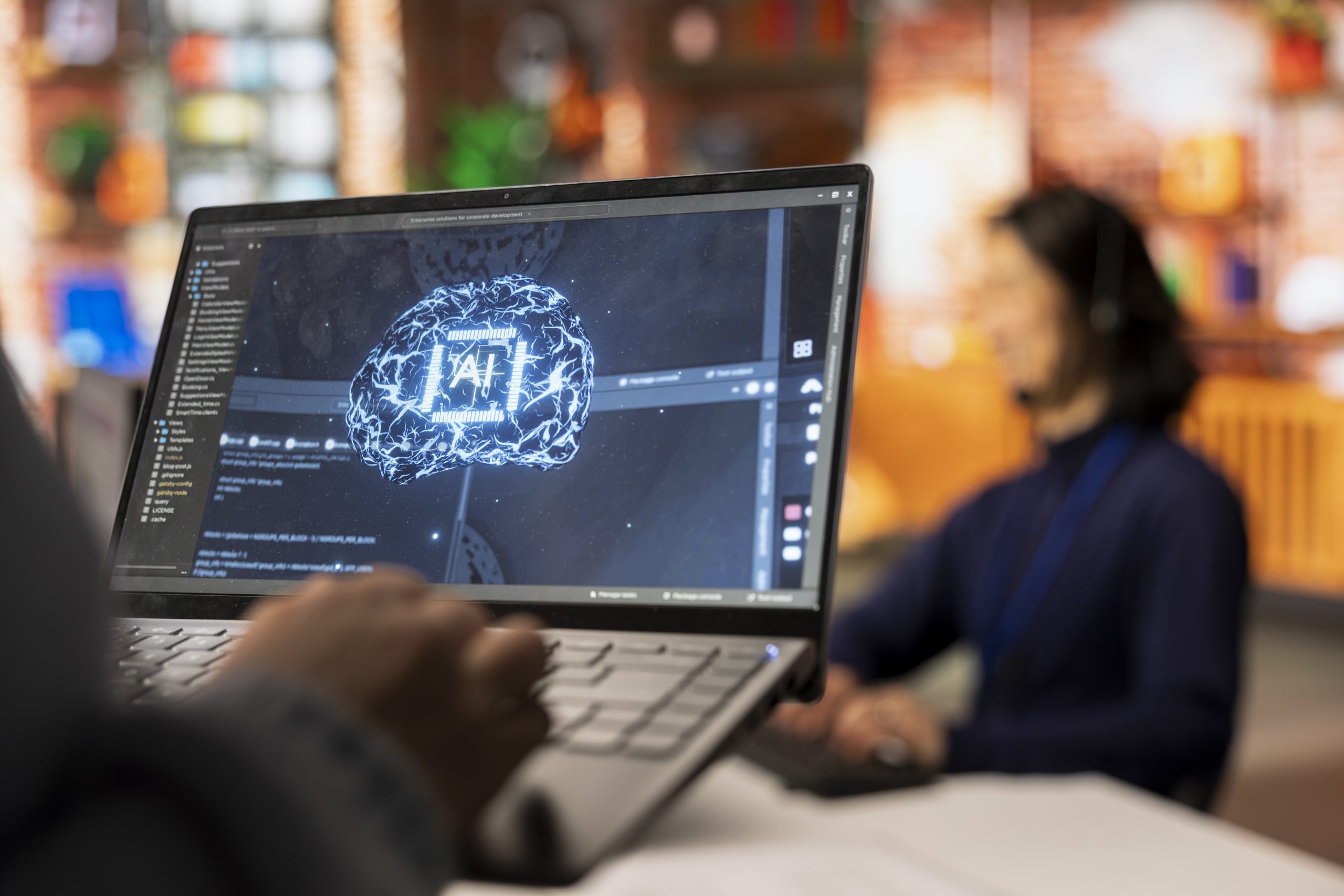
Artificial intelligence is reshaping how businesses create brands. AI tools such as ChatGPT, Canva and other generative platforms are increasingly being used to create brand elements. A prompt goes in, a shortlist of names or visuals comes out – often faster and cheaper than using traditional brainstorming. These AI tools can help produce ideas at scale and speed previously unimaginable, but under Australian law, the legal ownership of any IP in that output can be unclear.
Unlike human creators, AI systems do not have legal personality: they cannot own intellectual property, enter contracts, or assign rights. Australian courts and IP laws reflect this fundamental principle. Trade marks can only be owned in Australia by the legal person or entity that registers and uses the mark – not by the machine that generated it.
Hence, there are some important questions to ask when an AI tool helps create a brand: who owns it, and can you protect it with a trade mark?
Copyright vs Trade Marks: An Important Distinction
Much of the public debate around AI focuses on copyright ownership and authorship. Trade marks, however, operate differently than copyright, for the following reasons:
- a brand name or logo does not need to be “original” in the copyright sense to be eligible for trade mark protection;
- trade mark rights in Australia arise from use (as a badge of origin), not creativity; and
- ownership is tied to commercial use, not authorship.
That said, copyright can still be a relevant factor for trade marks that include a creative work, such as logos and stylised words. Some AI-generated output may not attract copyright protection at all, which affects trade mark owners using AI-generated output. These owners may be left relying solely on either trade mark registration or an effective trade mark watching and enforcing strategy to protect their key brand elements, making it even more critical to apply for trade mark registrations early and in all operative jurisdictions.
AI and Trade Mark Ownership in Australia
Under the Trade Marks Act 1995 (Cth), ownership of a trade mark in Australia arises from use in trade or a genuine intention to use it in connection with goods or services. Unlike copyright, trade mark protection does not depend on human creativity at the time of creation.
Even if an AI tool generates a trade mark, a business can still apply for and own that trade mark (provided the mark is eligible for registration). However, this assumes that the business is free to use the AI output, and that no third party has a stronger claim to the mark.
In these assumptions lie the biggest risks using AI-generated output to create trade marks: AI tools are not (sufficiently) able to conduct due diligence searches and ensure that the trade mark is eligible for use and registration, in a manner that is typically done by legal experts. AI models are trained on vast datasets that may include existing registered trade marks and brands used overseas but not yet known locally. This creates a real possibility that an AI-generated brand could be too similar to an existing trade mark that is already registered and/or in use, which may put the business using that brand at risk of trade mark oppositions or infringement actions down the track.
This risk is particularly present in Australia, given that Australian law recognises the first user of a trade mark in Australia as the owner of that trade mark (for the goods and services it is used for), but Australia’s trade mark registration system operates more or less on a first-to-file basis: the Australian Trade Marks Office conducts its clearance searches based on entries on the Australian Trade Marks Register alone and does not consider any real-time use when assessing the registrability of a trade mark application. As a result, common law trade mark rights (owned by businesses that use a trade mark but have not applied to register that trade mark) are not considered by the Trade Marks Office.
As a result, a business that only owns unregistered “common law” trade mark rights through use of its trade mark – even if it is the first user – can only protect and enforce their rights by closely watching the Australian Trade Marks Register and challenging any other traders’ use of a trade mark too similar to theirs. The problem is, often these businesses will not have an effective watching strategy in place, and only become aware of an issue when confusion is already occurring in the marketplace. Taking action to battle such confusion can be difficult, timely and expensive – especially when the trade mark in question is AI-generated and it is unclear whether any copyright exists in the logo either.
In short, from a trade marking perspective, the main issue with AI-generated brands is that AI does not conduct trade mark clearance searches in a manner that informs whether any legal risks already exist in the AI output – not yet, anyway.
AI and Copyright Ownership in Australia
Separate from trade marks, copyright protection in Australia does only arise when the creator can establish a sufficient degree of human authorship. This means AI-generated works cannot be afforded any copyright protection unless a human has added meaningful creative input. This is relevant to trade marks that include a creative output such as logos and stylised word trade marks: if purely AI-generated, they may not be copyright protected at all – even if a registered trade mark is secured for it.
Not owning the copyright that subsides in a trade mark can have serious consequences: without copyright ownership, you cannot block others from copying the AI-generated trade mark in a more general sense. Additionally, without owning the underlying rights, you may not be able to validly licence, transfer or sell the trade marks. Considering IP can be the most valuable asset of many businesses, particularly in the tech, pharma, fashion and entertainment industries (think Apple, Pfizer, Nike, Disney), the absence of copyright can significantly weaken the overall value of a business and its IP enforcement strategy.
Start-ups are also at a particular risk when they operate using a non-registered AI-generated trade mark, as they may not have clear legal grounds available to stop a competitor from using a confusingly similar trade mark.
AI Platform Terms: Read the Fine Print
The terms and conditions of AI platforms themselves add yet another layer of complexity to the influx of AI use in brand generation. Many providers such as Canva have adopted an IP policy that states that their users get broad licences to use designs that were created using stock on their platform, but that the provider itself retains full ownership.
Some other platforms may adopt a policy that intends to assign IP ownership of the created work to the end-user, but do not guarantee that there is any IP to assign or that the wording used in the policy effectively establishes an assignment in accordance with the law.
AI Platform terms of use not only vary widely, but may be also governed by foreign law which adds another layer of complexity to establishing IP ownership – something Australian businesses should consider when leveraging offshore AI tools. Understanding the terms adopted by AI platforms can be essential not just for current ownership clarity, but also for future investment, sale and licensing transactions where a clear title is expected.
Practical Takeaways
For businesses using AI in brand creation, a few practical steps can significantly reduce risk:
- Treat AI as a tool, not a substitute for legal advice
AI can be used to generate ideas, but should not be used to assess trade mark registrability or infringement risk. - Review AI platform terms and conditions
Ensure you understand who owns the output and what rights are granted. - Conduct proper trade mark clearance searches
Before investing in and adopting a trade mark, clearance searches remain essential. - File early
As AI-generated branding becomes the norm rather than the exception, we can expect more trade mark disputes over prior rights. Securing trade mark registrations across operative jurisdictions early can prevent costly disputes later. - Ensure meaningful human input
For copyright, meaningful human creative contribution in the output of generative AI strengthens legal footing.
Final Thoughts
AI is changing how brands are created, but it has not changed the fundamentals of trade mark law. Ownership still belongs to the business that uses the mark, not the machine that generated it, and is best established by trade mark registration. The real challenge lies in ensuring that AI-generated brands are legally available, defensible and properly owned.
If you are using an AI-generated trade mark and have not yet applied for trade mark registration, it is best to do so as soon as possible. Copyright ownership may not exist in an AI-generated trade mark, and proving trade mark ownership when another has already registered the trade mark before you are often very difficult, lengthy and expensive.
If you require assistance or advice relating to your trade marks, MBIP can help. Please reach out via our book a meeting form or by calling our office on 07 3369 2226 to be put in contact with one of our skilled trade marks attorneys.