
Apple Design Decisions: What Leads to a Fruitful Design Examination?
Published 12 March 2026
There is no requirement for registered Designs to undergo substantive examination in Australia. As such, it is rare for a design examination to occur, and rarer still for a proceeding to reach the Delegate (let alone a court!).
As far as I am aware, a design examination reached the Delegate only 4 times in 2025, and the latter two occurrences both had the same defendant: Apple Inc.
Apple of course is widely known for its distinctive design practices, which offers us a good opportunity to learn about how the Designs Office is currently interpreting design law in Australia.
Each of the two cases that appeared before the Delegate hinged on a different factor. In the first, it was that a Designer’s freedom to innovate can influence the weight given to relatively small differences. In the second it was in the specifics of what was disclosed by the prior art.
Apple Inc [2025] ADO 3 (10 November 2025): ‘Battery’
The decision regarded two designs from Apple that had the same prior art cited against them. However they are fairly similar so, like the Delegate, we do not need to consider them separately.
|
Apple Design |
Citation |
 |
 |
|
|
 |
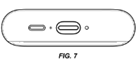
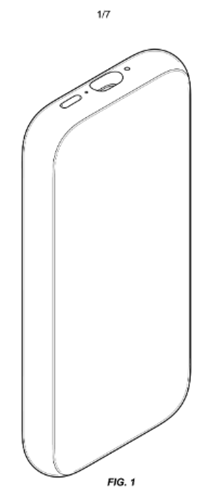
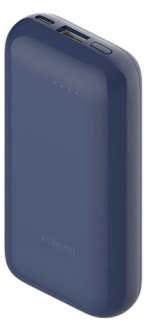
Each are for a ‘battery’. This term has grown to encompass a very wide variety of devices, from small tabs that power watches to closet-sized house batteries and beyond. As such, the Delegate observed the nature of the design and narrowed their approach: “Helpfully, the connection ports disclosed in the representations readily reveal that this is in fact a specific form of battery, commonly referred to as a ‘power bank’. That is, this species of battery is connected by cable to directly recharge other electronic devices, particularly where mains power is unavailable or inconvenient.”
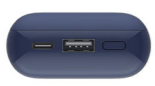
As can be seen in the figures above, the Apple designs do have a certain similarity to the citation. But we must be more rigorous than that: a design must legally be ‘new and distinctive’ when compared to the prior art base, where ‘new’ covers if the design is or isn’t identical to something existing. This can be fairly cut or dried usually and is in this case: at the very least the relative dimensions (e.g. width vs thickness) are different when comparing the Apple designs to the citation, meaning the Apple designs are ‘new’. So it is in ‘distinctiveness’ that the case will be decided: how similar the design is or isn’t to the prior art in ‘overall impression’.
Throughout the examination process (prior to the involvement of the Delegate) the Examiner had maintained that there was similarity in overall impression and that, therefore, the Apple designs were not distinctive. Obviously, Apple disagreed.
As seen through the eyes of a Familiar Person, who in general must give more weight to similarities than differences, there are a number of factors to consider when determining distinctiveness (according to Section 19(2)(a)-(d) of Designs Act 2003). In my opinion, the Delegate relied primarily upon 19(2)(c), although the other factors played a part.
19(2)(a): have regard to the state of development of the prior art base for the design.
The design examination process revealed a wide diversity in power bank-type designs, meaning that the prior art base is highly developed. The Delegate therefore concluded that the familiar person would likely place a greater emphasis on smaller differences because there are so many types of battery-pack products “which are overall rectangular in shape with soft filleted edges and a pill side profile shape”.
19(2)(c): consider amount, quality and importance of the similarities in the context of the design as a whole.
The Delegate considered whether there is ample similarity in overall impression between the design and the prior art. The Delegate noted that the similarities include an overall pill shape with curved edges and lack of ornamentation, as well as the location of the necessary ports. However, the Delegate also noted that the nature of the curved edges is different, and that Apple’s design is thinner/flatter, along with other minor differences including the shape of the ports. The Delegate concluded that the differences outweigh the similarities.
19(2)(d): have regard to the freedom of the creator of the design to innovate.
Related to the above, the creator’s freedom to innovate is entwined with the development of the prior art. Industry norms and essential functions (necessity of containing chemical battery components, having standard connection ports, etc.) can ‘directly curtail the creator’. This feeds into the Delegate’s conclusion above, that greater emphasis should be placed on smaller differences.
Overall, the Delegate concluded that the Familiar Person would note the differences and similarities, in the context of a crowded design filed, and conclude that the Apple designs are not substantially similar in overall impression to the cited prior art and were, therefore, new and distinctive.
Apple Inc [2025] ADO 4 (24 December 2025): ‘Cushion’
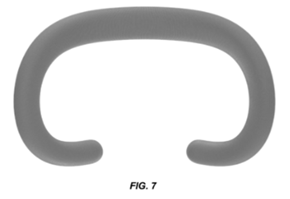
In this Christmas Eve edition of a Delegate decision, the Delegate was asked to consider a design for a cushioned headband suitable for, in particular, VR goggles. The Examiner raised 20+ citations against the Apple design, but the Delegate chose to focus on the two below as being exemplary.
|
Apple Design |
Citations |
 |
Citation 1 |
|
|
Citation 2 |
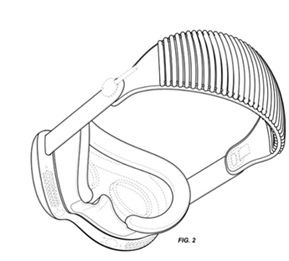
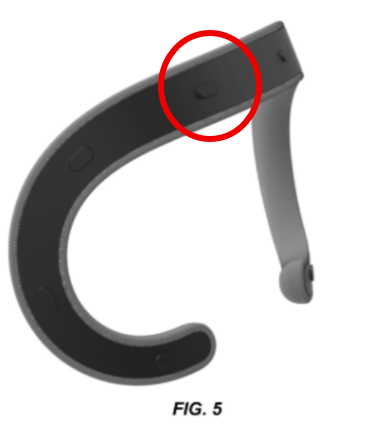
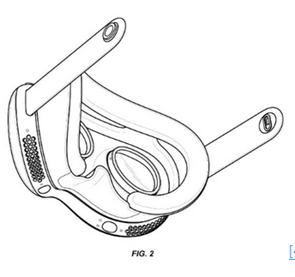
The factors the Delegate was asked to consider are the same as those described above regarding the battery designs. In this case, there appears to be similarities in shape and dimensions. Importantly, the clip lock elements (as I have circled in the figures above) are not visible in any of the cited prior art.
The Delegate noted that these clip lock elements are an important visual feature, and that their appearance is not solely dictated by function: here they are ovoid, but they could be square, or triangular, etc. Further, the location where these clip locks may be present in the citated art is not visible in the provided images. The Delegate concluded that since there is no feasible way to infer what is not shown, they could not consider any theoretical, unseen feature of the cited art. As such there is no evidence of the clip lock elements in any of the cited documents.
Regarding the overall shape, the Delegate considered the designer’s freedom to innovate. They concluded that it was quite limited, given that the cushion is for the function of cushioning a human face from a headset, and so is limited to shapes that perform that function.
The Examiner also considered the contrasting colours and material differences seen on the underside of the Apple design. These are not present in the citations.
Overall, the Examiner concluded that the citations lacked important details that were present in the designs and that therefore the Apple design is not substantially similar in overall impression to the cited prior art and is, therefore, new and distinctive.
Takeaways for Design Examination
Examination of a registered design in Australia is itself an unusual occurrence, so it is highly valuable to gain insights into the way the Delegate considers these matters. I believe that there are two key takeaways here. The first is that small differences can ultimately be important in a crowded marketplace. The second is that because designs are primarily concerned with the visual appearance of things, a design cannot be judged against invisible or hidden features.
For additional information or advice about Australian Registered Designs, including design examination, please get in touch with one of our experienced attorneys at MBIP!