
Client Spotlight – Lyro Robotics: Amazon Challenge Project to Startup Success
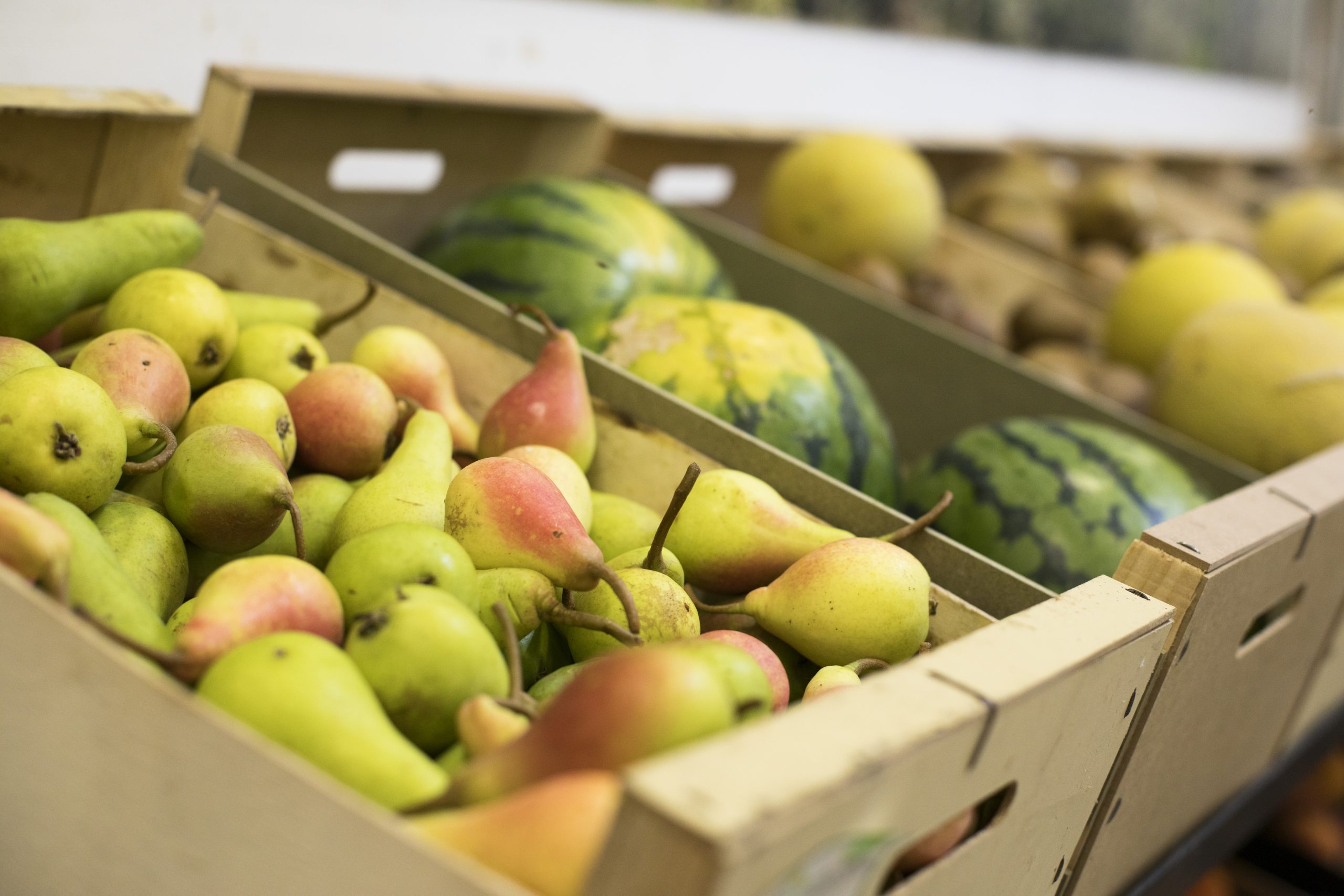
With labour shortages threatening some areas of the agriculture industry, one MBIP client startup is presenting a high-tech solution to this problem: robots. Lyro Robotics harnesses advanced technological innovations to develop robotic systems to automate repetitive tasks in the food chain.
The company’s robots can pick up and pack away pieces of fresh produce of different shapes and sizes for transport – a task that, while straightforward for most human beings, requires a lot of technical prowess for a machine. Since produce can be fragile and are not necessarily uniform in shape and size, it can be difficult for robots to identify pieces of fruit and successfully handle them without causing damage.
Lyro Robotics’ systems do just that; leveraging computer vision, deep learning, and robotic systems to create a pick-and-pack solution for warehousing and supply chain issues (including labour shortages) and eliminating food waste that occurs when produce can’t be packed in time for delivery, or it gets damaged in the packing process.
Lyro recently celebrated 5 years since incorporation, an impressive milestone for a tech startup. In today’s article we will highlight some IP lessons startups can learn from Lyro’s success.
Starting Up
Lyro was founded in Brisbane, Queensland by Nicole Robinson, Juxi Leitner and Norton Kelly-Boxall; three members of the winning team for the 2017 Amazon Robotics Challenge. The challenge was to develop a system to sort and manoeuvre an assortment of objects to different locations. The Australian Centre for Robotic Vision, of the Queensland University of Technology (QUT), won the challenge with their robot developed on a modest budget that utilised a different approach to the 15 other teams in the competition, eventually beating out other teams from various universities and robotics institutions around the world, and winning first place.
This win inspired the team, showing that the technology being developed at the Queensland University of Technology presented an opportunity to be transferred to a tangible, useful product.
Now, 5 years since Lyro Robotics was incorporated, the startup is thriving, with multiple locations, spanning Brisbane, Melbourne, and Boston, USA.
The organisation’s tech has now been deployed to dozens of farmers across Australia. They are aiming to continue expanding and bringing their technology to more farmers, venturing to various horticultural and AI conferences and meetings to showcase the technology’s capabilities.
Startup Lessons from Lyro Robotics
MBIP has been assisting with intellectual property protection for Lyro since 2022, including filing a provisional and a standard Australian patent to protect their motion arrestor assembly.
The Motion Arrestor Assembly leverages an extendable suction member to grip items, paired with a stabilising component, the motion arrestor member, that secures and prevents rotational movement during handling. This dual mechanism is critical for handling objects of diverse shapes and weights, ensuring a secure grip and controlled transport. In high-paced environments, such as produce sorting and packaging, this solution helps reduce the risk of drops and damage, while improving speed and efficiency—two attributes essential to automated logistics and warehousing.
MBIP has been actively involved in helping protect this technology, filing both provisional and standard patent applications for the Motion Arrestor Assembly in Australia. Like other high-tech startups, Lyro recognised the value of filing a provisional application early.
The filing of a provisional patent application can be a key part of a startup’s IP protection strategy. A provisional filing does not offer patent protection, it is not examined and not an enforceable right. However, provisional patent applications stake a claim with IP Australia, priority date wise, for a subsequent complete patent application. This is a particularly valuable step for tech companies, as they operate in a highly competitive, innovative, and fast-paced industry in which having the earliest possible priority date for a patent application can be a crucial competitive advantage.
The Lyro team also received a grant from Advance Queensland’s Ignite Ideas funding in 2022 of $100,000 – a valuable amount for a startup. We always recommend looking into funding opportunities available for startups and innovative small businesses from the Australian government or in your state.
If you’re developing new and innovative technologies, it’s always a good to know your options for intellectual property protection. Jeremy Moller (Principal) is experienced with dealing in patents for startups and knowledgeable in a variety of technologies for consumer products and industrial systems, as well as artificially intelligent systems. If you’d like to discuss your IP strategy, contact Jeremy via jeremy@mbip.com.au or submit a meeting booking request on our website.