
Branding a Nation Part 2: The Rise of Australian Lifestyle Brands (1950s–1970s)
Published 16 June 2026
In the decades following World War II, Australia entered a period of profound transformation. Economic prosperity, mass immigration and rapid suburban expansion reshaped daily life, while the emergence of television, radio and glossy print advertising revolutionised how businesses communicated with consumers.
Advertising drew on shared desires for comfort, progress and leisure, reflecting a society prioritising modern lifestyles and personal fulfilment after a wartime period marked by marked by scarcity and deprivation. As a result, trade marks became more symbolic and emotionally resonant, aligning themselves with the dreams of a modernising nation.
Nowhere was this transformation more visible than in the growth of suburbia and the emergence of a distinctly Australian lifestyle. The post-war “Australian Dream” of home ownership, family life and weekend recreation, shaped consumer habits and in turn, brand identity. Trade marks began to celebrate not just products, but experiences such as backyard barbecues, sporting events, beach culture and the rhythms of suburban life.
Several iconic brands emerged during this era, each capturing a different facet of this evolving identity.
Four’N Twenty
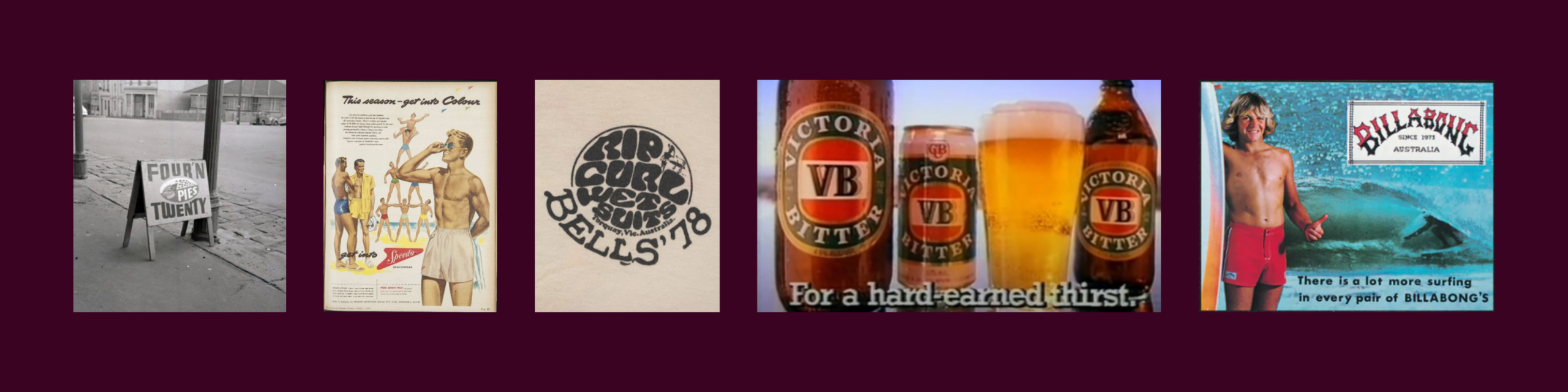
The Four’N Twenty story began in 1947, when L.T. McClure started baking what he claimed were the most delicious meat pies in Bendigo.[1] Drawing inspiration for the name from the nursery rhyme “Sing a Song of Sixpence,” Four’N Twenty quickly became deeply embedded in Australia’s sporting culture, particularly at football matches, where the trade mark became synonymous with working-class traditions and the shared experience of spectatorship. The pies’ strong presence in stadiums helped elevate them beyond a simple food item, turning them into a familiar ritual of attending the game. Extending beyond sport into popular culture, Four’N Twenty gained widespread appeal, resonating with Australians through its associations with humour, mateship and the communal spirit of the game.

Photo credit: Petits Tresors
Speedo
Meanwhile, Speedo rose to international prominence during the 1956 Melbourne Olympic Games, positioning Australia as a global leader in swimming and aquatic excellence. Its sleek and simple trade mark came to represent athletic achievement and the country’s deep connection to the water. As competitive swimming gained recognition on the world stage, Speedo’s identity reinforced Australia’s coastal image and sporting prowess.
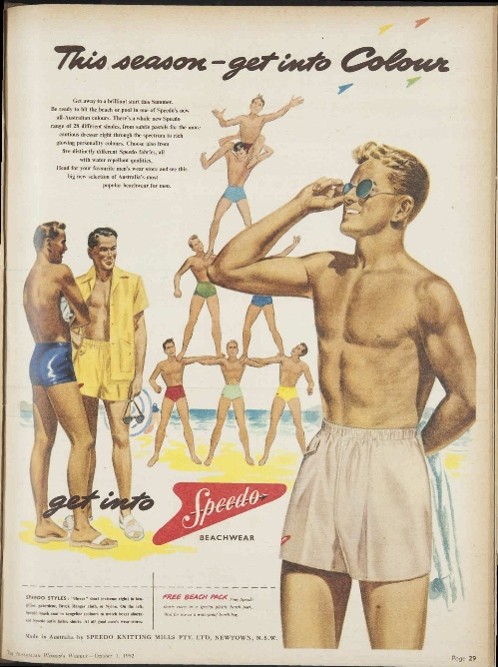
Photo credit: Internet Archive
Rip Curl and Billabong
The late 1960s and early 1970s saw the emergence of surf brands such as Rip Curl (1969) and Billabong (1973), which captured the growing influence of youth and surf culture. Their trade marks and visual identities drew on ocean-inspired imagery, such as waves, motion and flow, to evoke a sense of energy, adventure, and freedom from conventional ways of life. These brands embodied a relaxed, adventurous spirit that resonated both nationally and internationally. Through their trade marks, they each projected an image of Australia as carefree, sun-drenched and deeply tied to the ocean, an image that would become central to the country’s global identity.
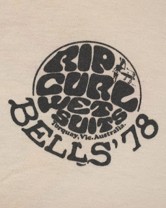
Photo credit: Internet Archive
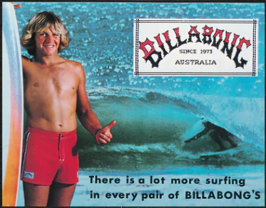
Photo credit: Hung up on Retro and Billabong Australia
Victoria Bitter (VB)
Victoria Bitter (VB), launched in the 1960s, quickly grew into more than just a popular beer, it became a defining symbol of Australian masculinity, manual/physical labour and social connection. Emerging at a time when Australia’s industrial workforce was still strong and deeply tied to ideas of physical work and mateship, VB positioned itself squarely within this cultural space. Its distinctive green label, bold lettering and no-nonsense tone further contributed to a strong, easily recognisable trade mark that resonated with a broad audience.

Photo credit: Herald Sun
Part 2 Conclusion
Together, these brands illustrate a broader shift in the function of trade marks during this period. They no longer served merely as indicators of origin or quality, they became expressions of identity, aspiration and belonging. Through the convergence of mass media and consumer culture, trade marks helped define what it meant to live the “Aussie lifestyle”, a life characterised by sun, surf, sport and suburban ease.
By the end of the 1970s, Australian brands were not only shaping domestic perceptions but also influencing how the nation was seen abroad. In doing so, they laid the foundation for Australia’s growing presence in global culture, particularly in sport, leisure and youth identity.
If you are looking to stand out in your industry, a distinct and well-protected trade mark portfolio can elevate your brand to an icon. For advice regarding trade marks, contact MBIP.
You can read Part 1 here: Branding a Nation: How Trade Marks Shaped Australian Culture (1900–2026) | MBIP
[1] Four’N Twenty <https://fourntwenty.com.au/pages/our-story> [accessed May 2026]